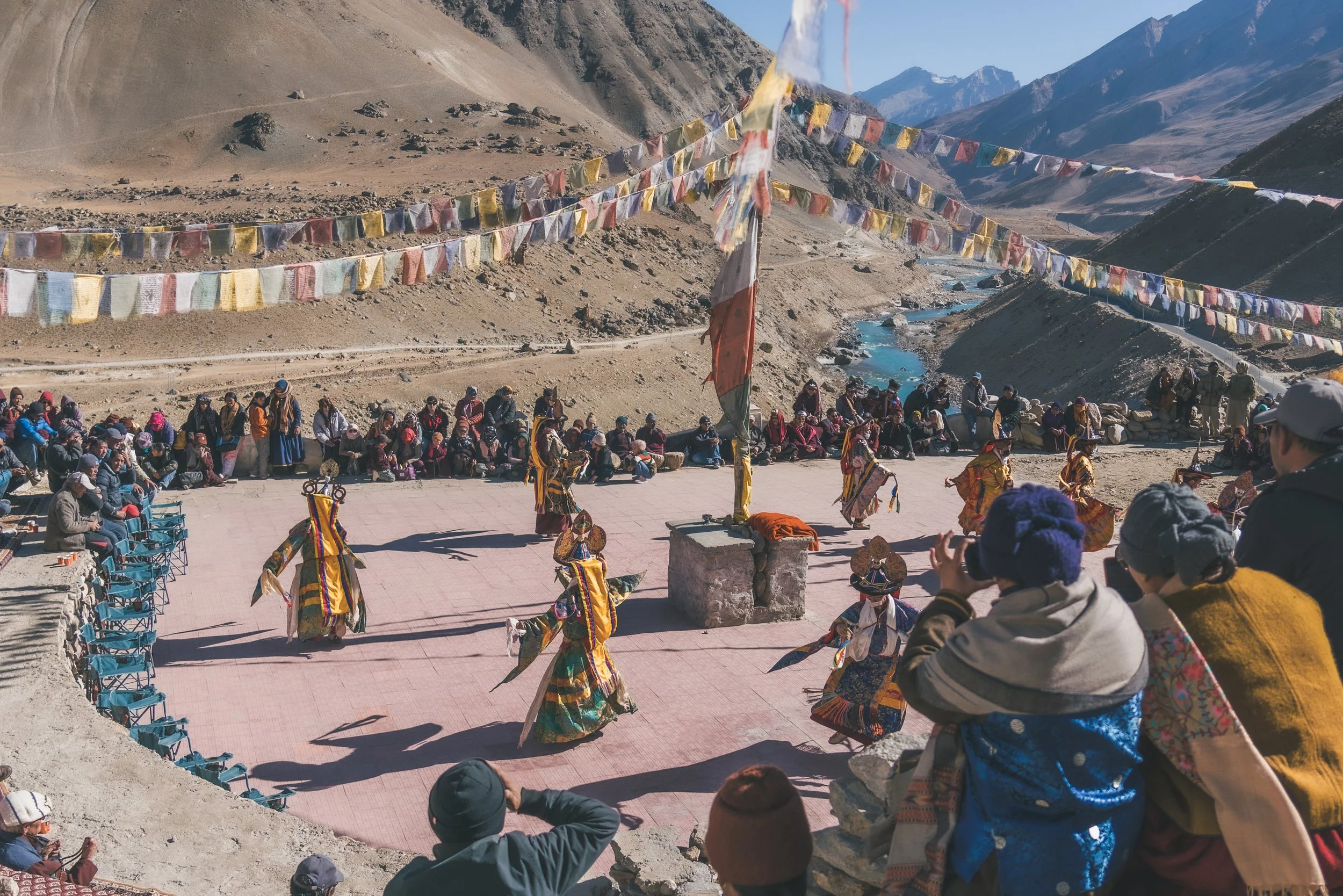
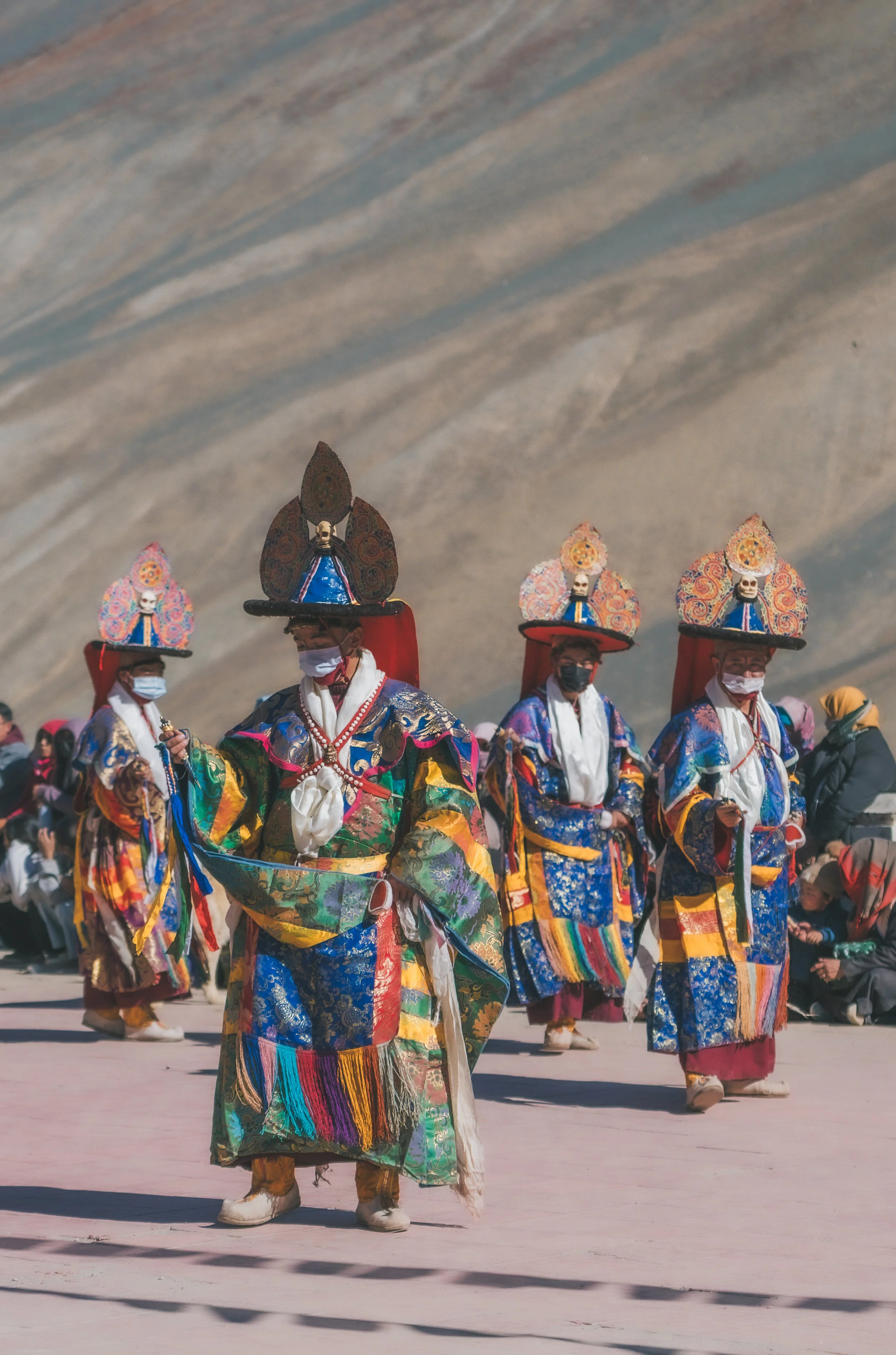
It was almost silent—only the wind whispering through the valley accompanied the deep, resonant beats of drums, the clash of cymbals, and the haunting drone of long horns.
The Hurim Festival was one of the most vibrant, hauntingly beautiful events I’ve ever witnessed. Sitting among villagers, watching the sacred unfold beneath a vast Himalayan sky, I found myself awestruck, less by the spectacle and more by its meaning.
Held at the onset of winter, is a communal prayer—for safety, health, and survival through the coming months. At its heart are the Cham dances, ritual performances that blend prayer, theatre, and symbolism into a hypnotic visual dance.
The monks wore flowing robes in vibrant hues with each colour representing one of the five elements of Buddhist cosmology: blue for sky, white for wind, red for fire, green for water, and yellow for earth. Their masks, fearsome yet divine, portrayed powerful deities and legendary guardians believed to ward off evil and bestow blessings.
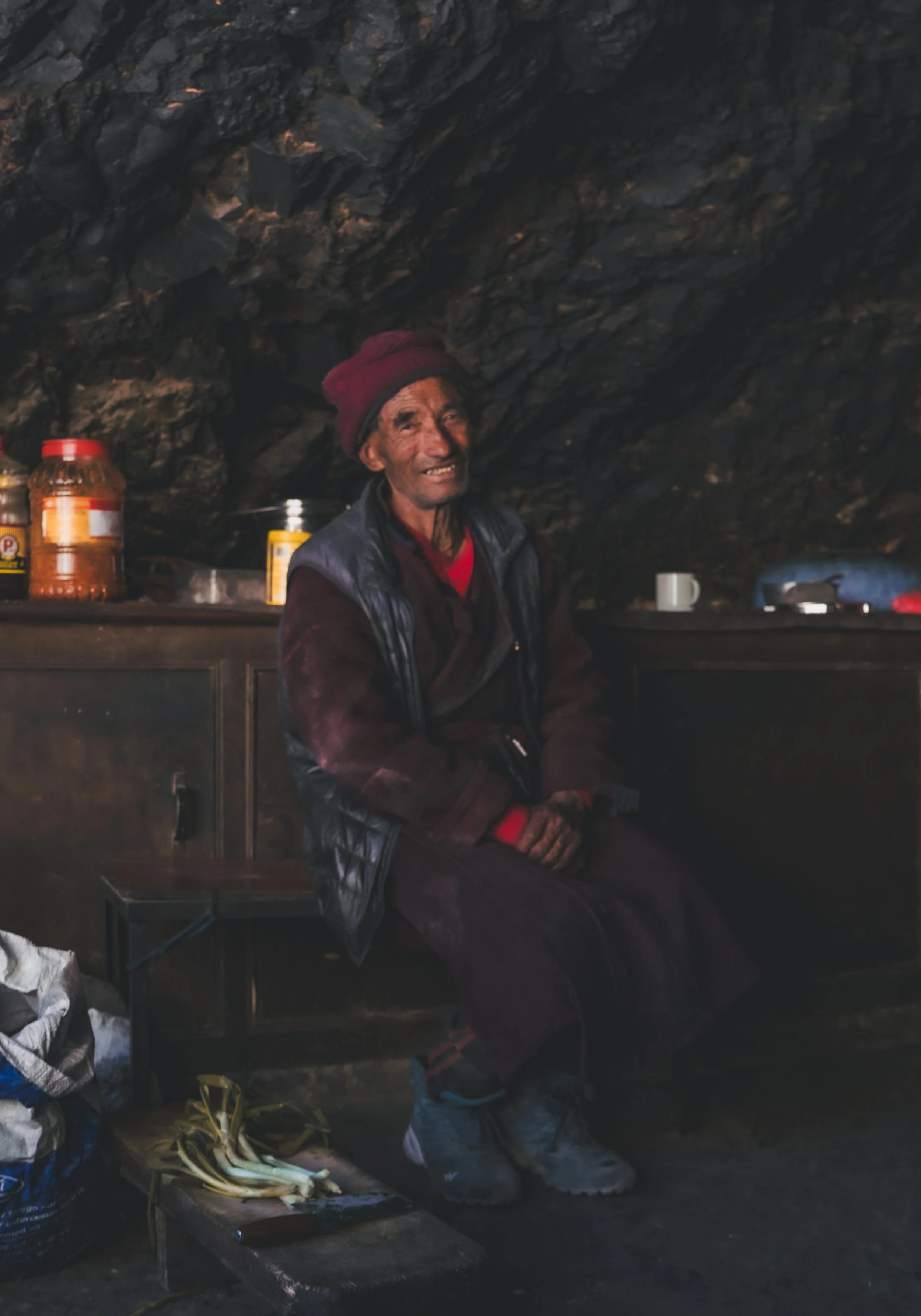
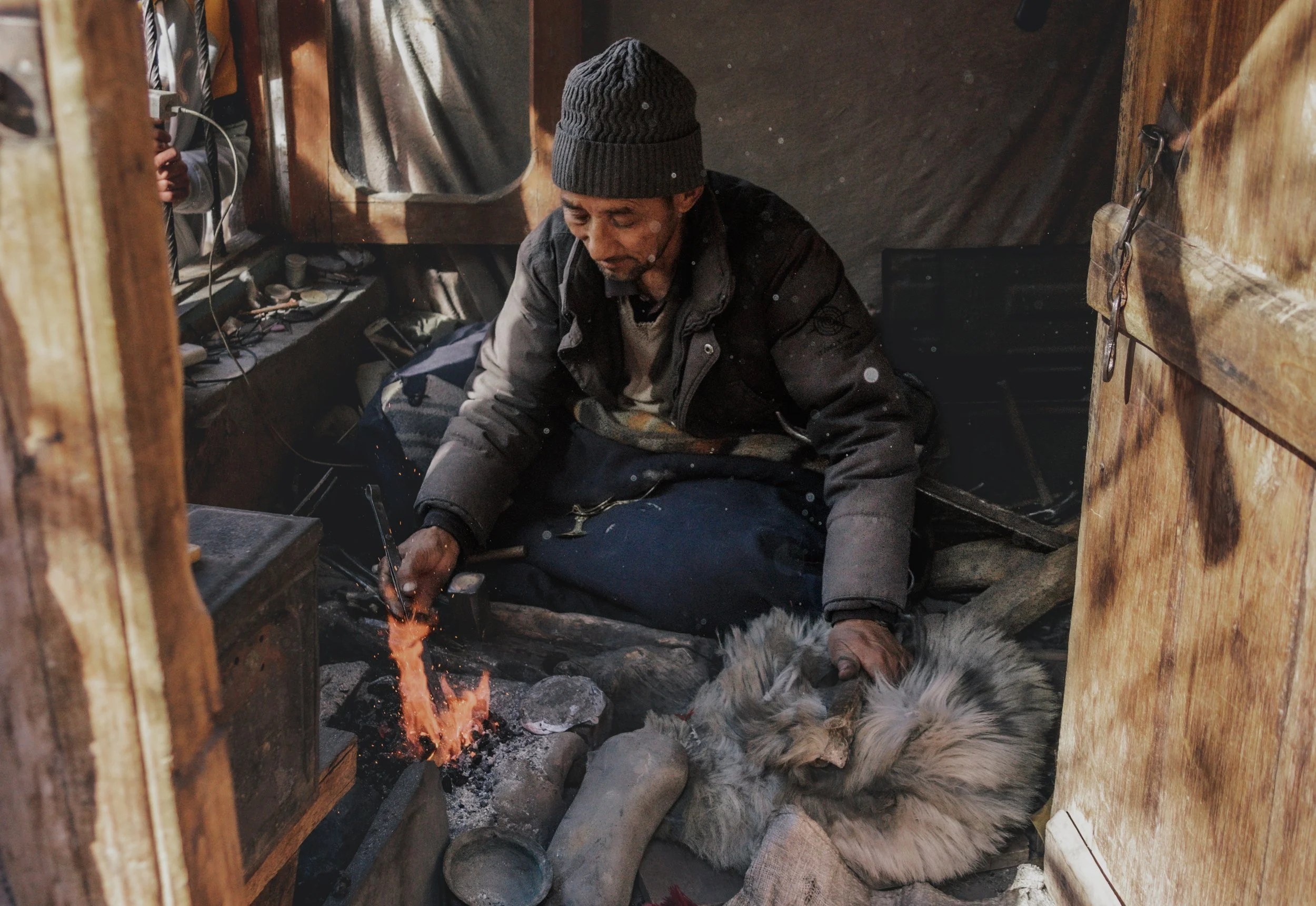
Visitors are greeted by Ringzin Dorji, a monk and kitchen assistant who was preparing momos. We chatted while helping him make tsampa, a humble meal of roasted barley flour. The atmosphere was warm, the silence outside punctuated only by the wind.
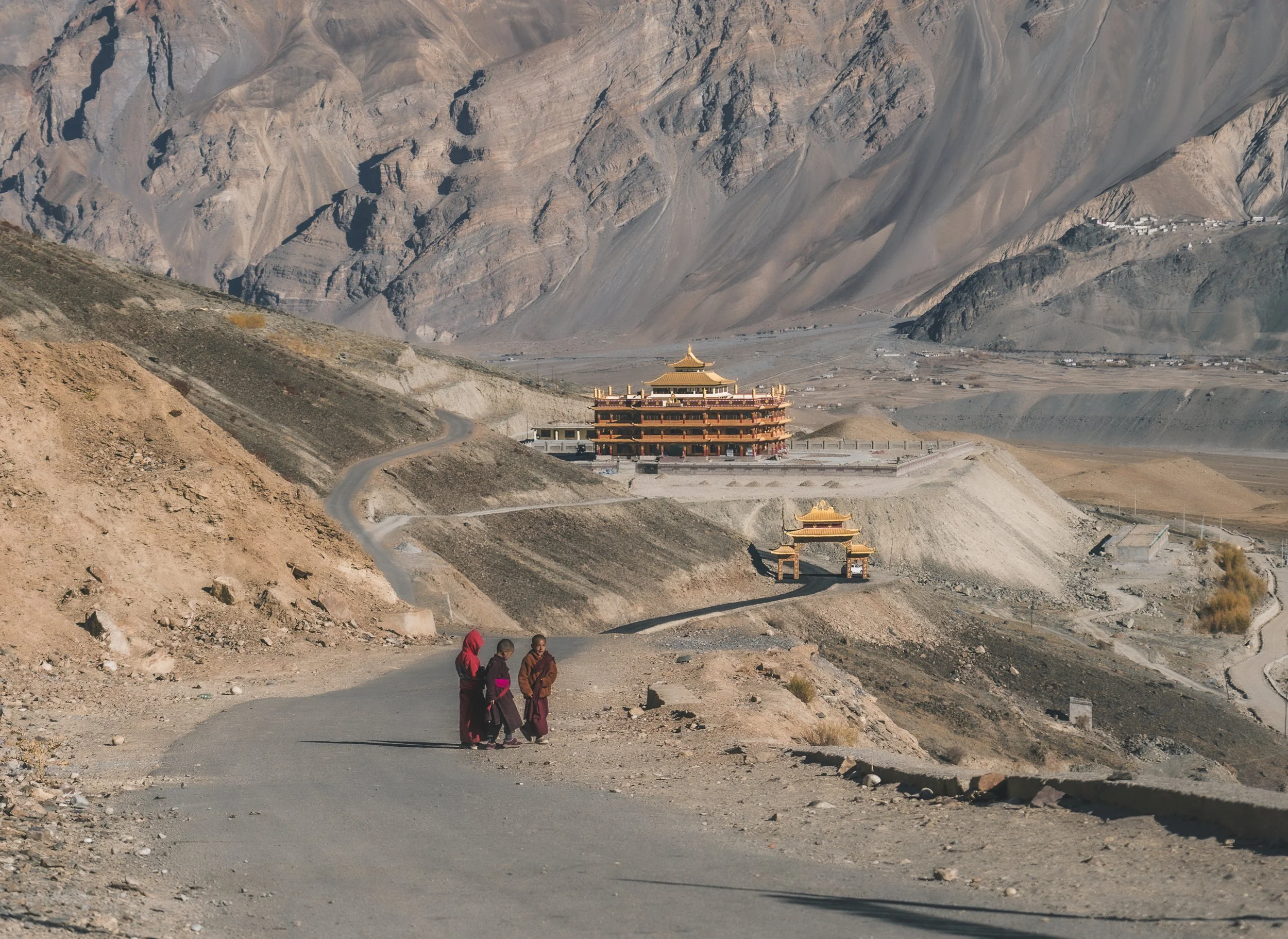
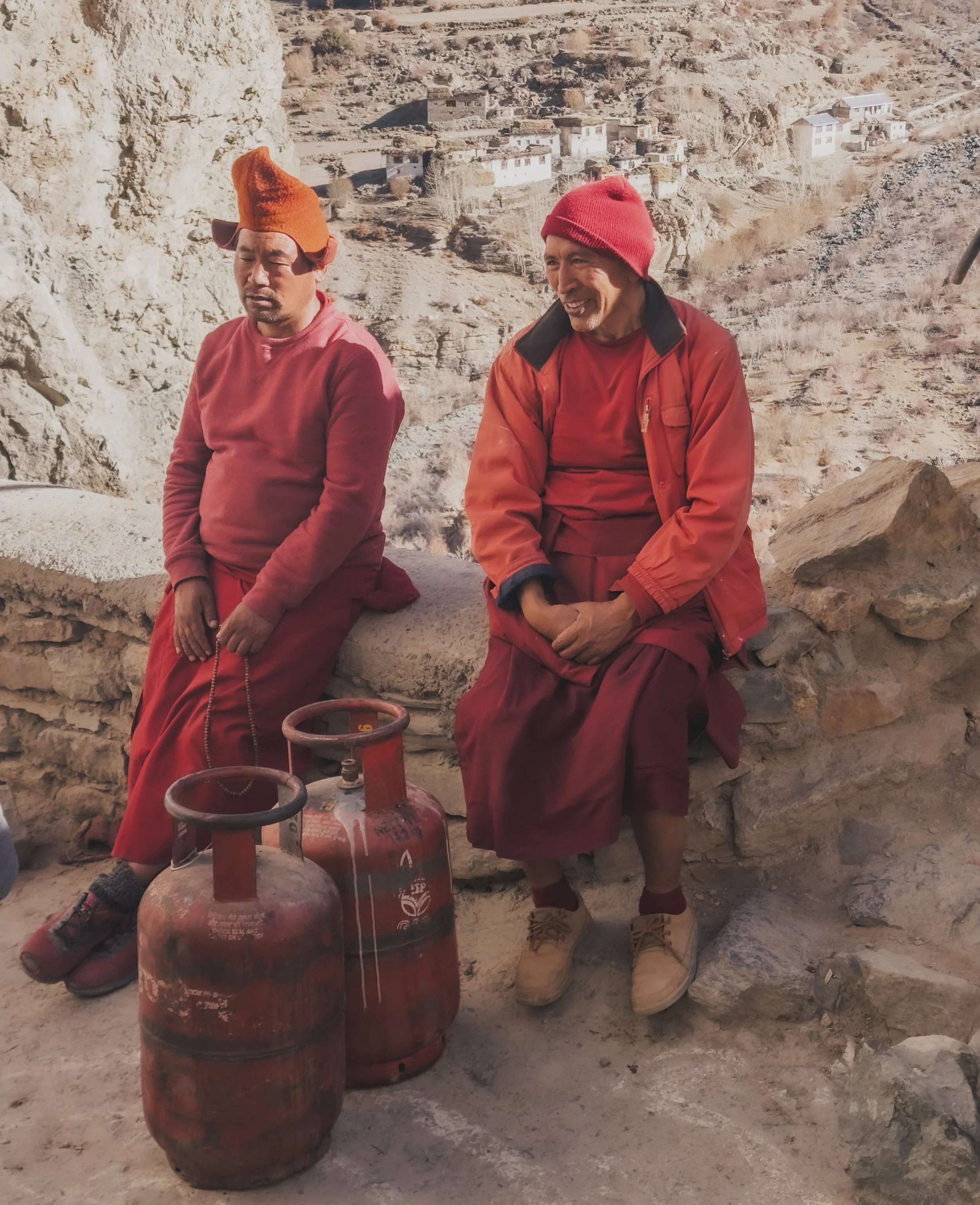
It was end of November and many monks had returned to their home villages before winter set in, but a few remained behind. Their routine was steady: prayers, chores, studies, repeated daily except on weekends when they could rest a bit longer. Even the smallest needs like propane, require immense effort. One would passed monks leading donkeys loaded with empty gas cylinders, headed down the mountain to refill them, a journey they’d repeat countless times.
By winter, Zanskar enters hibernation. Villages near Phugtal were nearly deserted, with most residents gone to lower altitudes before the snow locked them in. The monks would soon begin their winter studies, shielded from the world by towering mountains and ancient walls.
Zanskar in Ladakh is not a place you simply visit, it’s a journey you earn. Hidden in the shadow of the Himalayas, this remote valley cradles some of India’s oldest monasteries, their walls whispering tales of the Guge and Tibetan kingdoms that once flourished here. Locals with their sun-cracked lips and endless patience, led me through this living museum of faith and resilience.
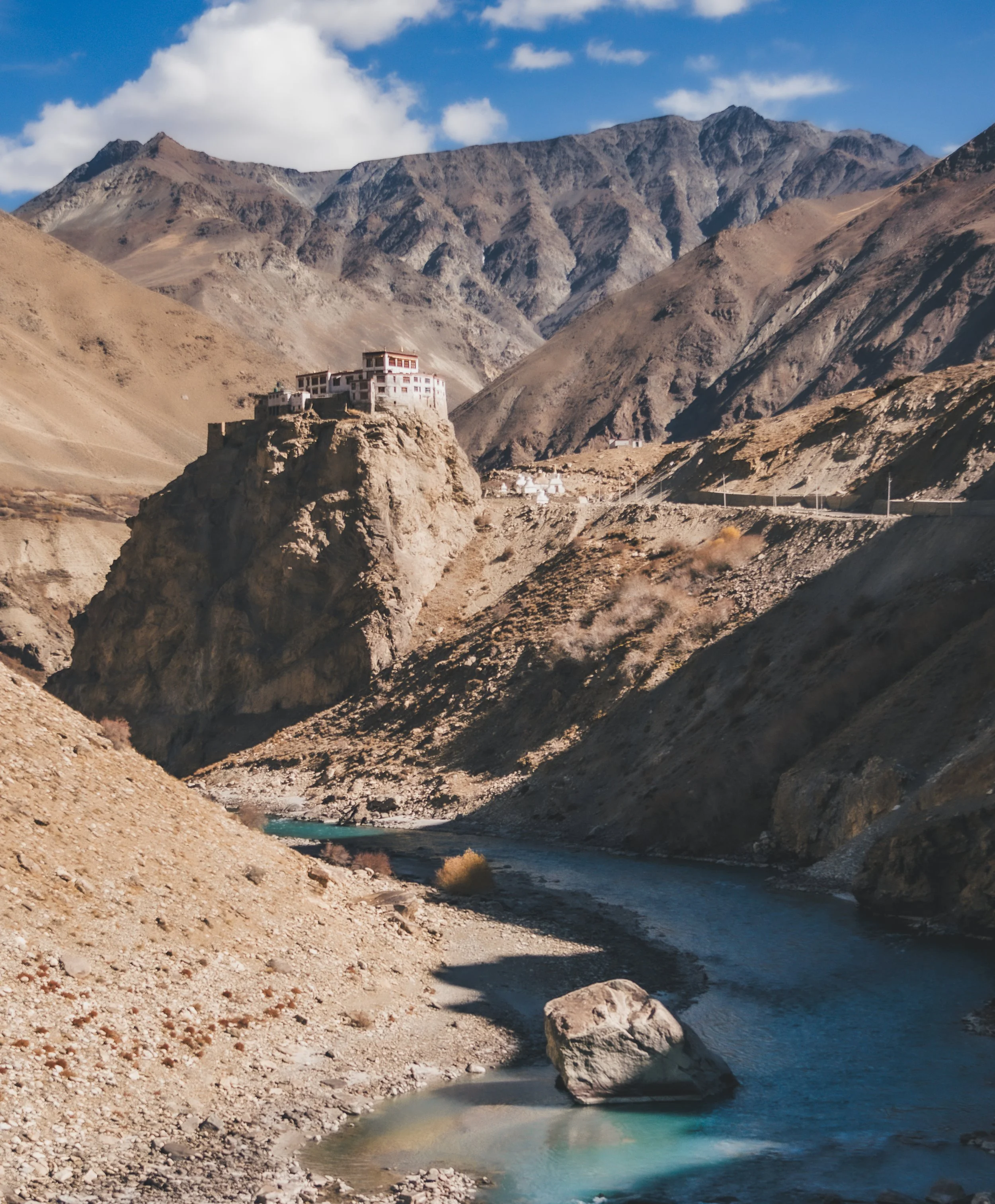
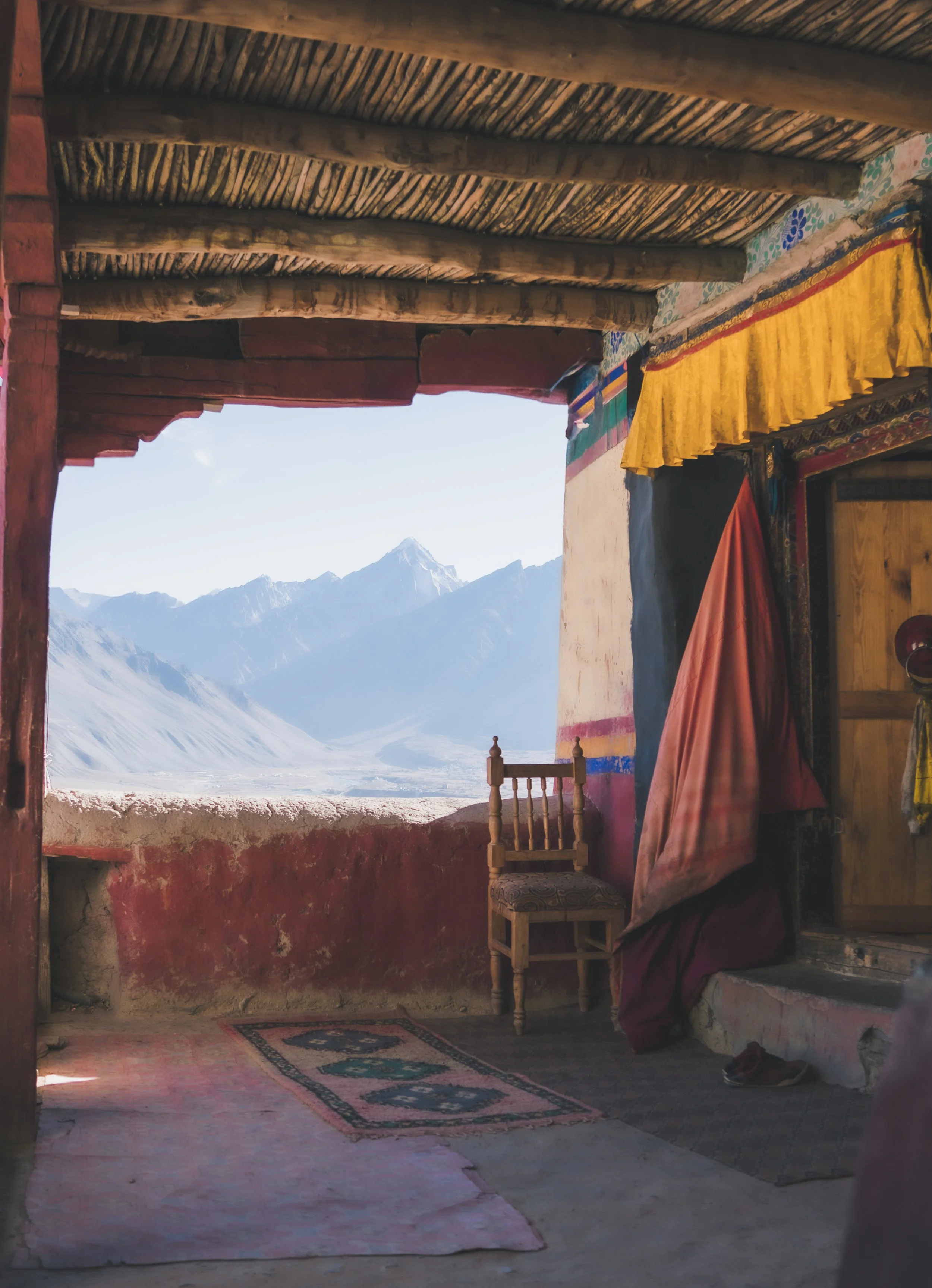
Remote monasteries are intentionally secluded, perched on cliffs or hidden in deep valleys. The journey to reach them is often as profound as the destination. Their locations mirror their purpose: to cultivate solitude, reflection, and resilience. It’s hard to fathom how such grand structures were built without modern machinery in such unforgiving terrain. And yet, they stand—weathered but unwavering. The most striking example of this harmony between nature and faith was Phugtal Monastery
Carved into a sandstone cliff like a beehive, it’s one of India’s most isolated monasteries. To reach it, we drove along rough, unpaved roads tracing the Zanskar River, finally reaching Cha Village, the last motorable point.
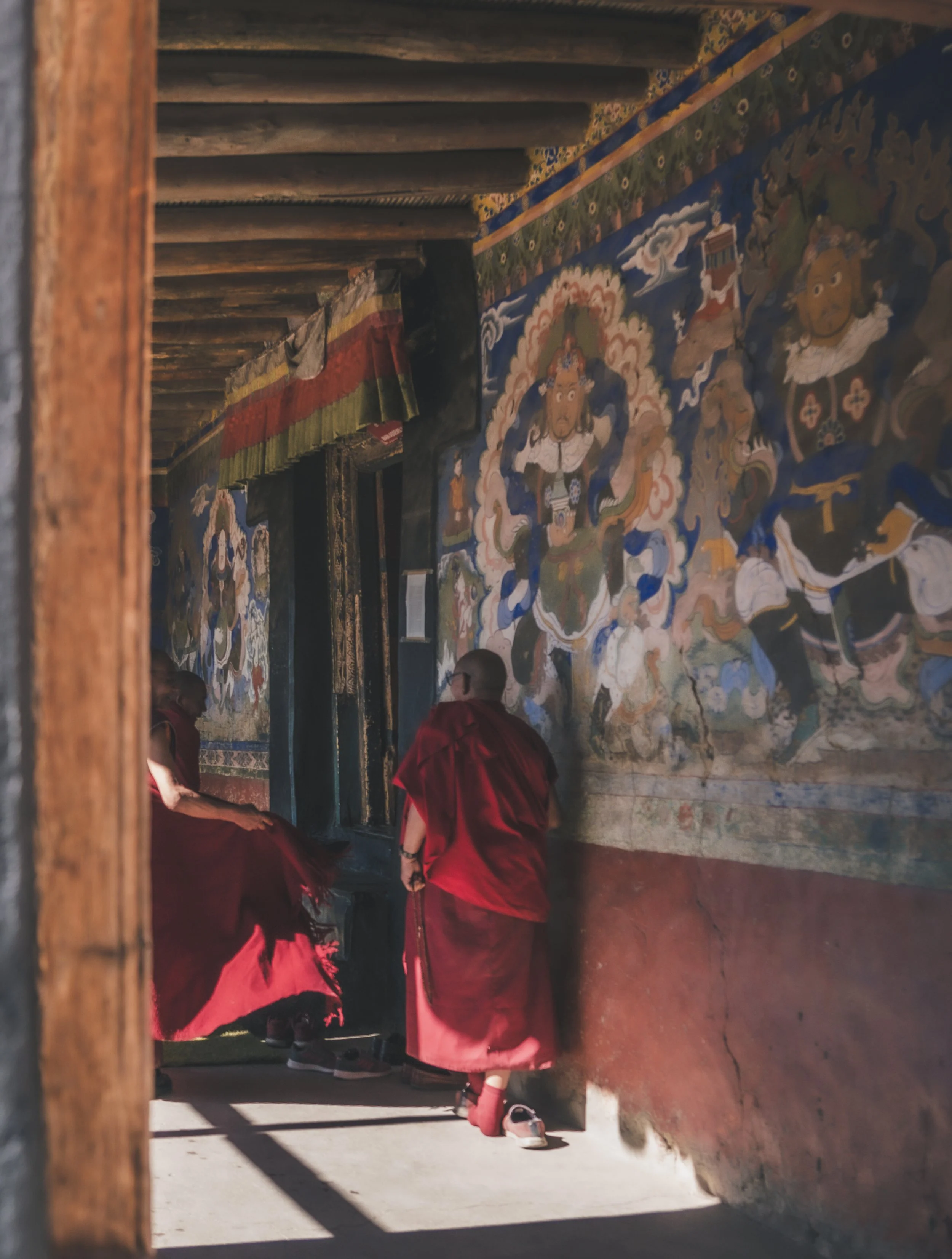
The region’s isolation is both its burden and its beauty. Come winter, Zanskar becomes nearly inaccessible due to heavy snowfall. "Families once had many children," a local told me as we shared tsampa, "knowing the snow would claim some." His matter-of-fact tone belied the horror: pregnant women carried on sleds for days to reach clinics; children sent to monasteries or nunneries as much for education as for survival. As they grow, they can choose whether to continue the monastic life or leave to forge their own path.
Yet the area is rapidly changing, especially with the ongoing road construction. There are even plans to build an airport in Zanskar. It’s only a matter of time before this remote region becomes accessible year-round, even during the harsh winters. The days of villagers enduring long walks just to travel from one point to another will soon be gone. No longer will they be at the mercy of snowstorms and inaccessible routes during the winter months. The future children of Zanskar would never know the harsh, isolating beauty of winter’s prison. Yet, perhaps they would create something unexpected—a Ladakh that retains its soul, even as it embraces the hand of modernity.
As I reflect on the future of Ladakh, I wonder what it will look like in the coming years. Empires rose and crumbled to dust beneath these unwavering peaks. Buddhist prayer flags fluttered where Bön shamans once cast spells. The mountains have always stood as silent sentinels over the vast dunes, monasteries, and villages. While ancient culture may seem remote, it can still be found in the alleyways of the townships and the rituals that endure. Yet, what will always remain is the adaptability of the land and the ever-changing culture of its people.