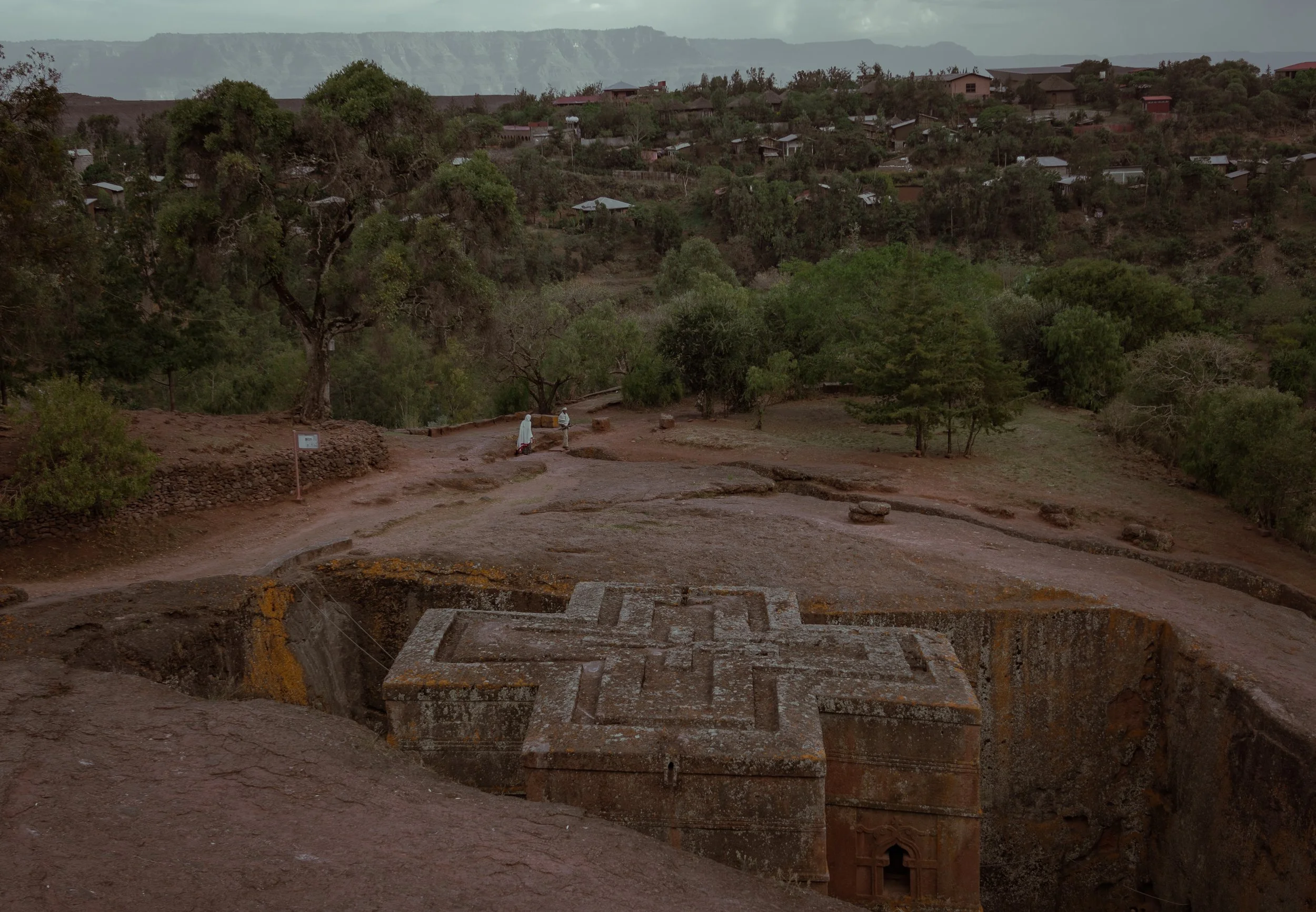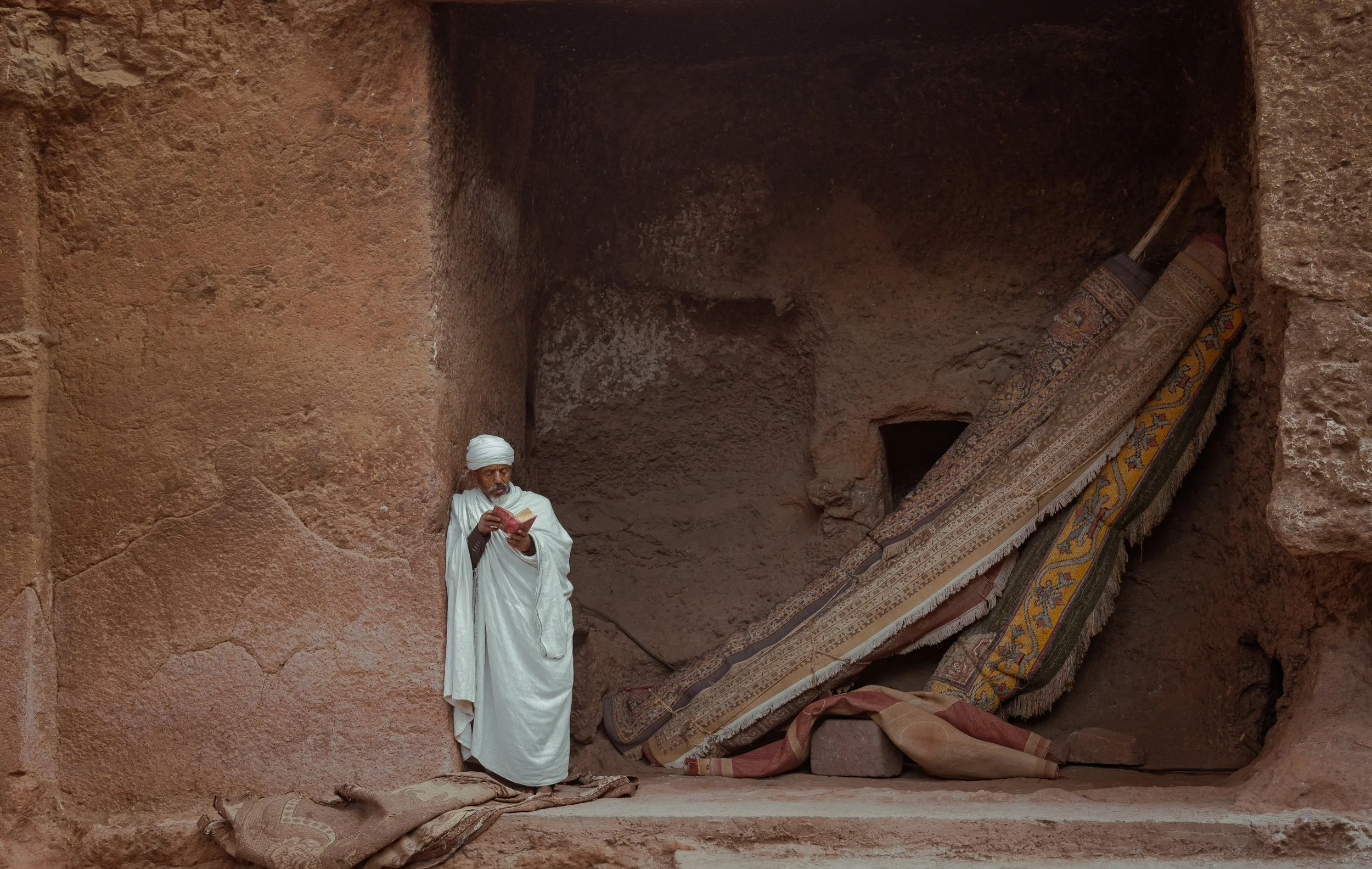
Easter is observed here with as much devotion as in other Christian-majority countries. Perhaps “celebration” isn’t the right word, after all, this is a solemn occasion. Easter holds deep significance in Ethiopia, especially in places like Lalibela and Tigray
Lalibela itself is a story of faith in stone. The town was named after King Gebre Mesqel Lalibela, who commissioned the eleven rock-hewn churches here. His goal was to recreate Jerusalem within his own kingdom. It is believed that constructing all eleven churches took about 24 years, between the late 12th and early 13th centuries. One legend says that an angel took the king to Jerusalem to see its churches. Inspired, he returned and built his own “New Jerusalem,” so pilgrims wouldn’t have to make the long and dangerous journey to the original city. Many people believe angels helped build these unique churches. Pilgrims continue to travel to Lalibela each year, receiving the same blessings as those who journey to Jerusalem.
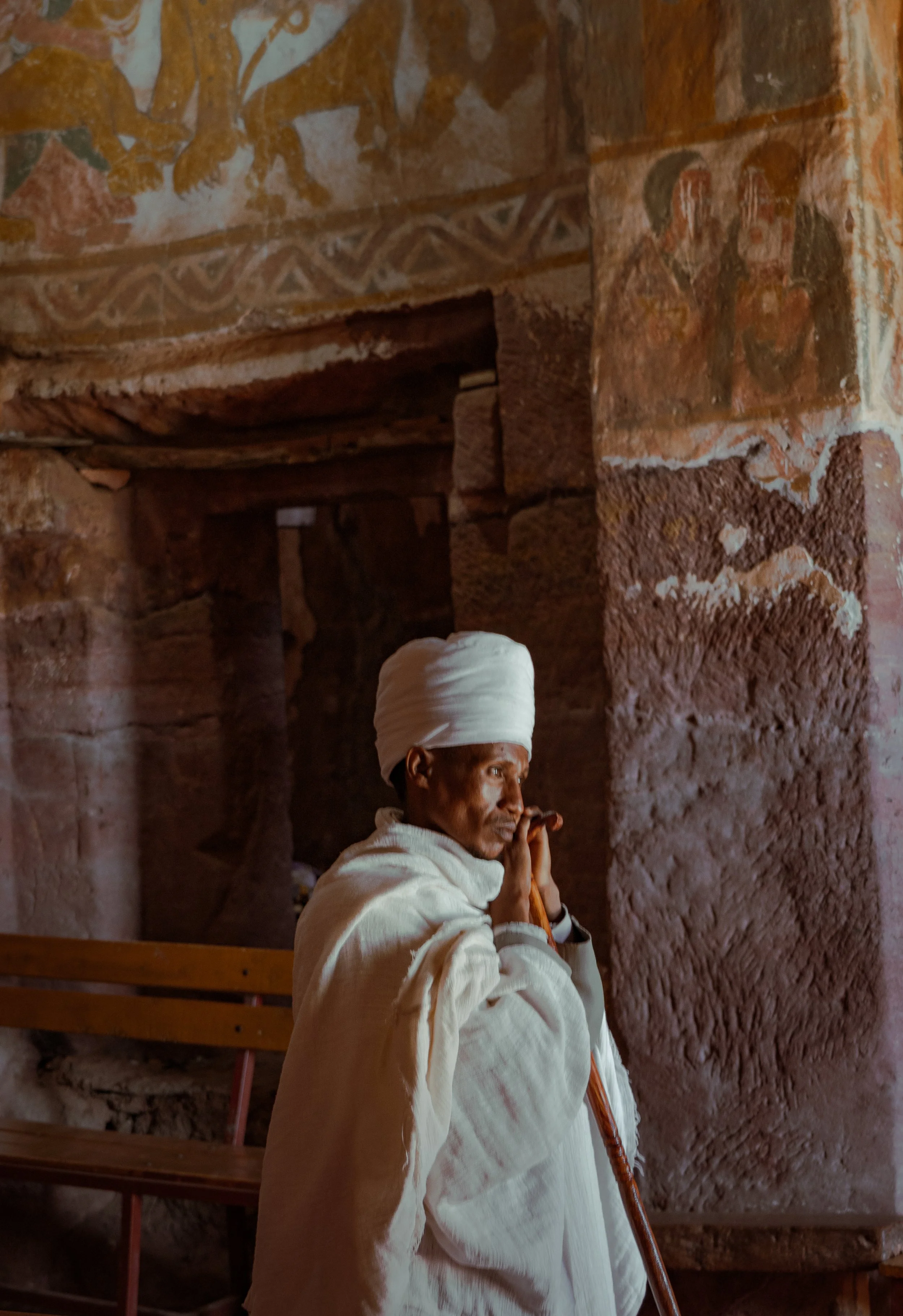
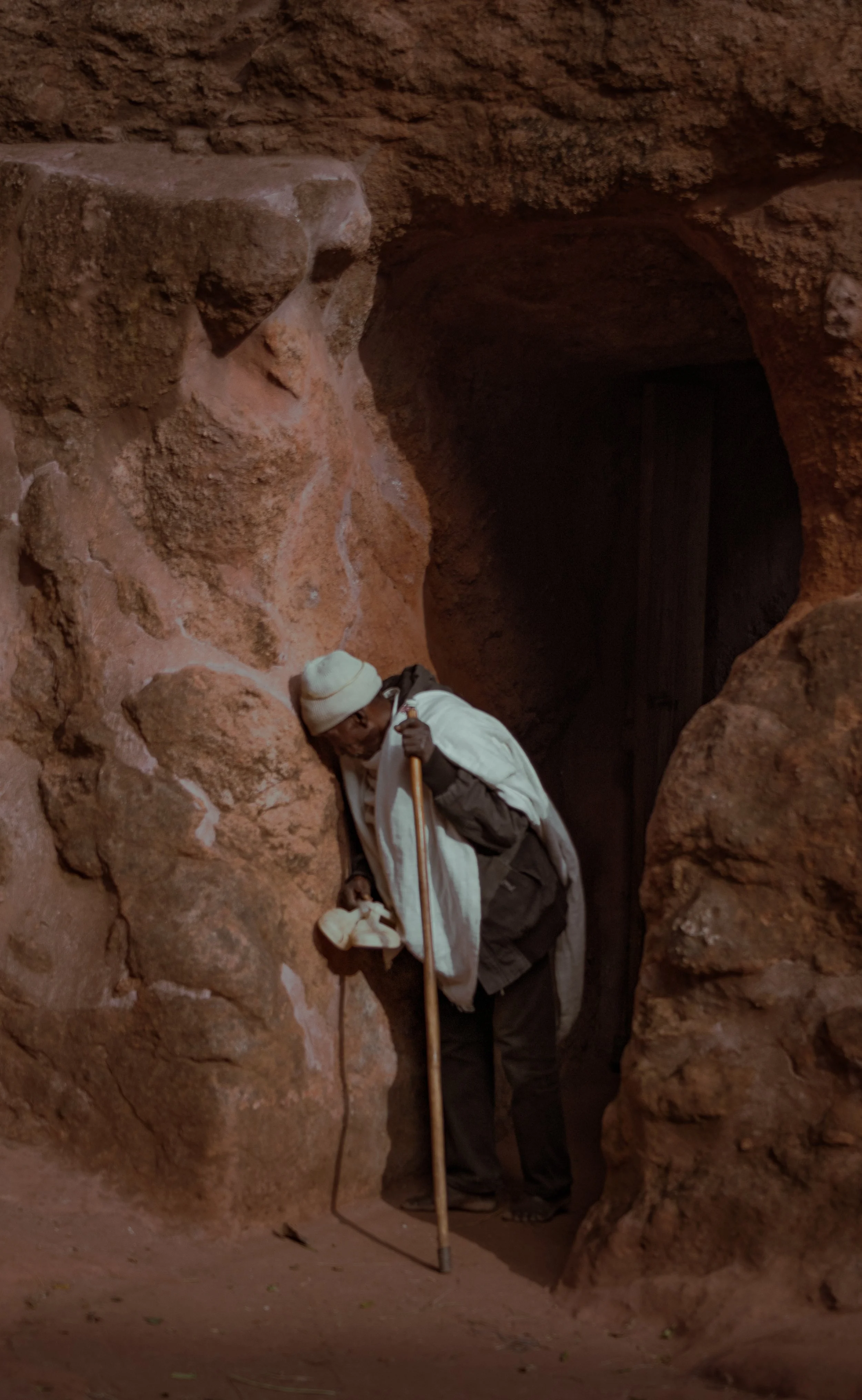
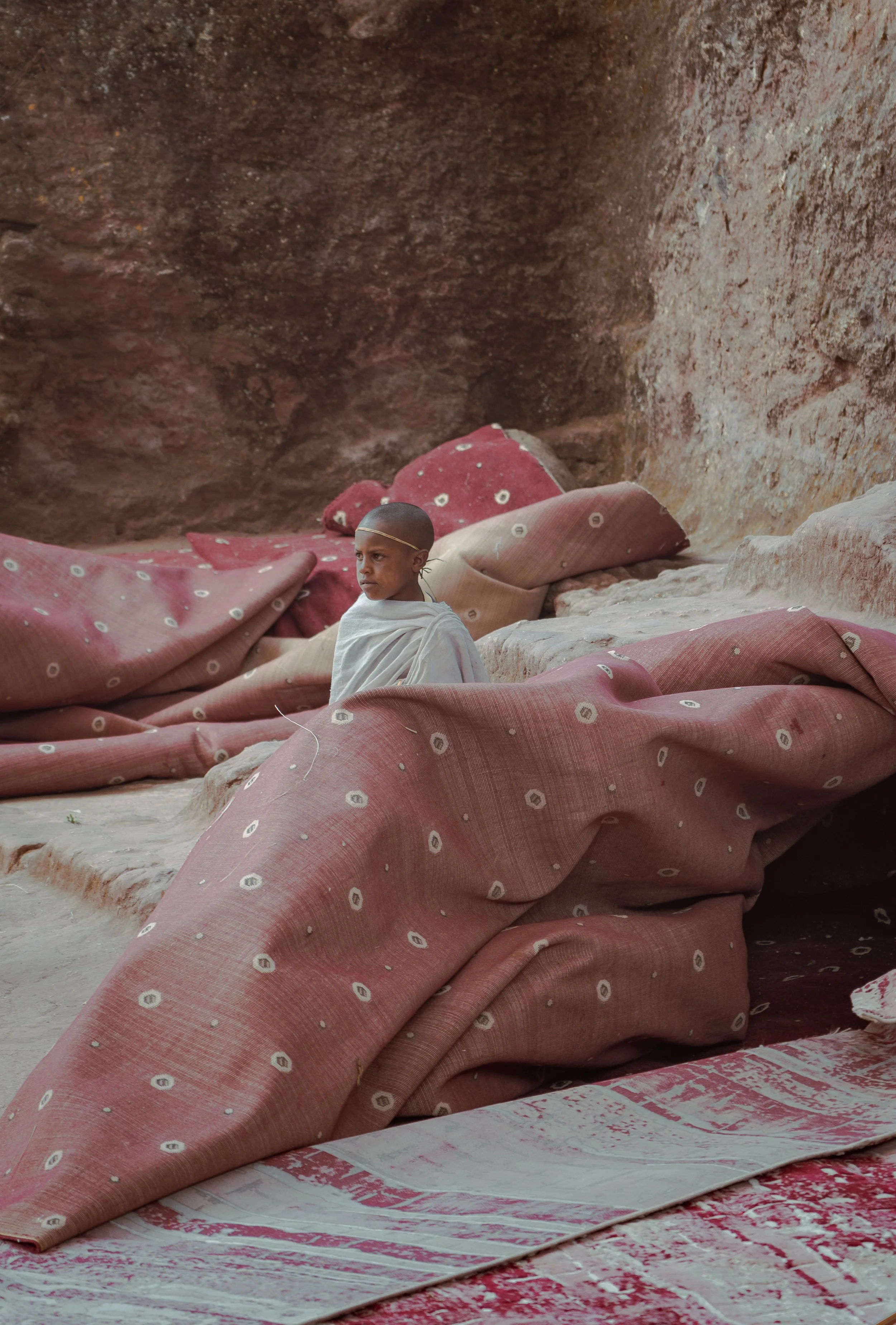
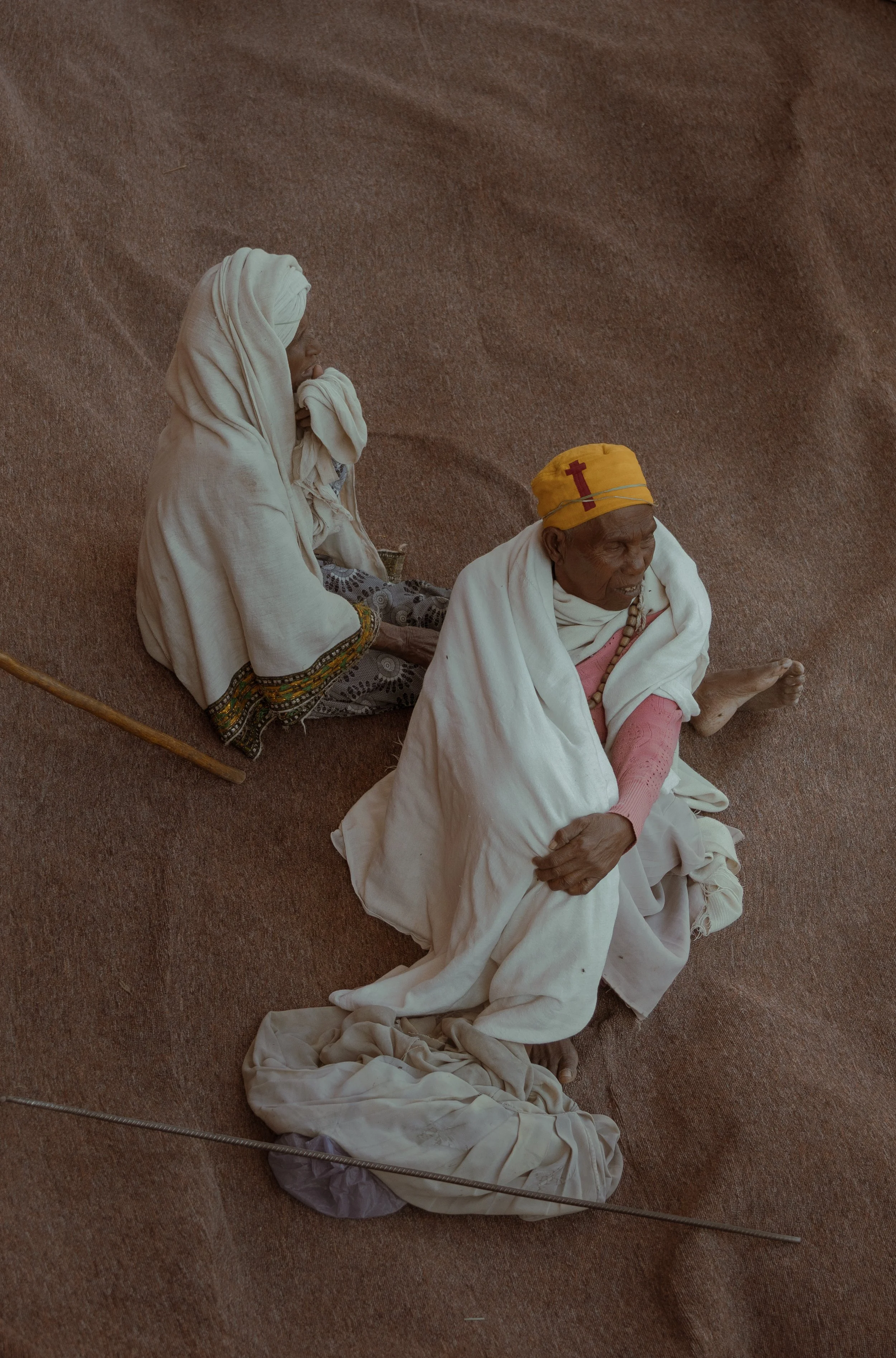
Easter, or Fasika in Amharic, is observed in every church, and as a visitor, you can move from one to another. Pilgrims, dressed in white shawls, make their way from church to church, bowing a set number of times in each, a symbol of the promises they have made to God in return for answered prayers
In Ethiopia, Fasika holds more weight than Christmas. For Orthodox and Evangelical believers, what matters most is not the birth of Jesus, but his death and resurrection. The crucifixion on a Friday is seen as the fulfillment of God’s word, and three days later, Jesus rose from the tomb—a moment celebrated as Easter Sunday in Ethiopia. This is why Fasika is the culminating celebration of the religious calendar.
The lead-up to Fasika is marked by a strict 55-day fast. During this time, no meat or animal products are consumed. It’s not just about abstaining from food; it’s a period of reflection, commitment, and spiritual preparation, a way for believers to prepare themselves for the most momentous day of the year.
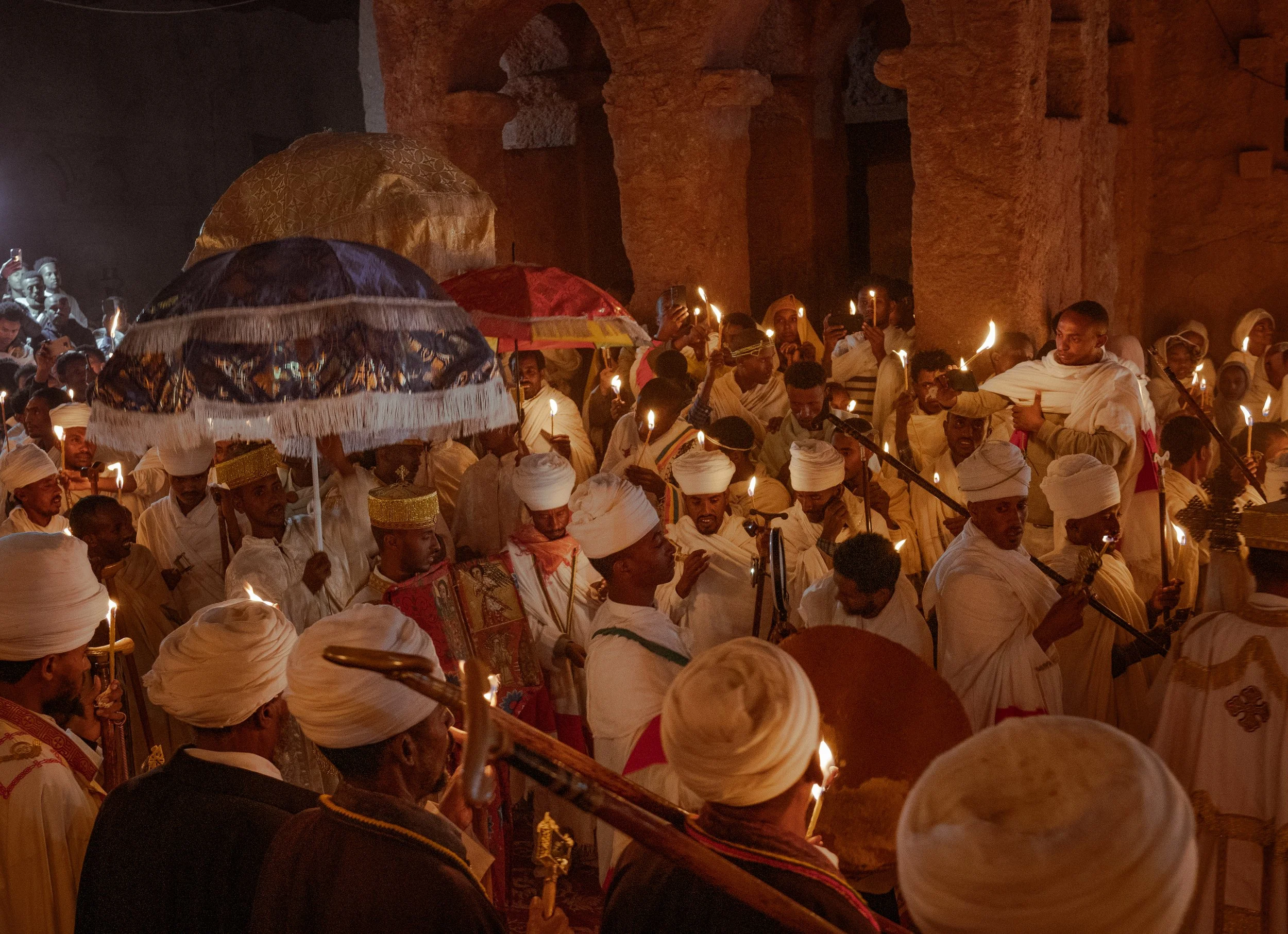
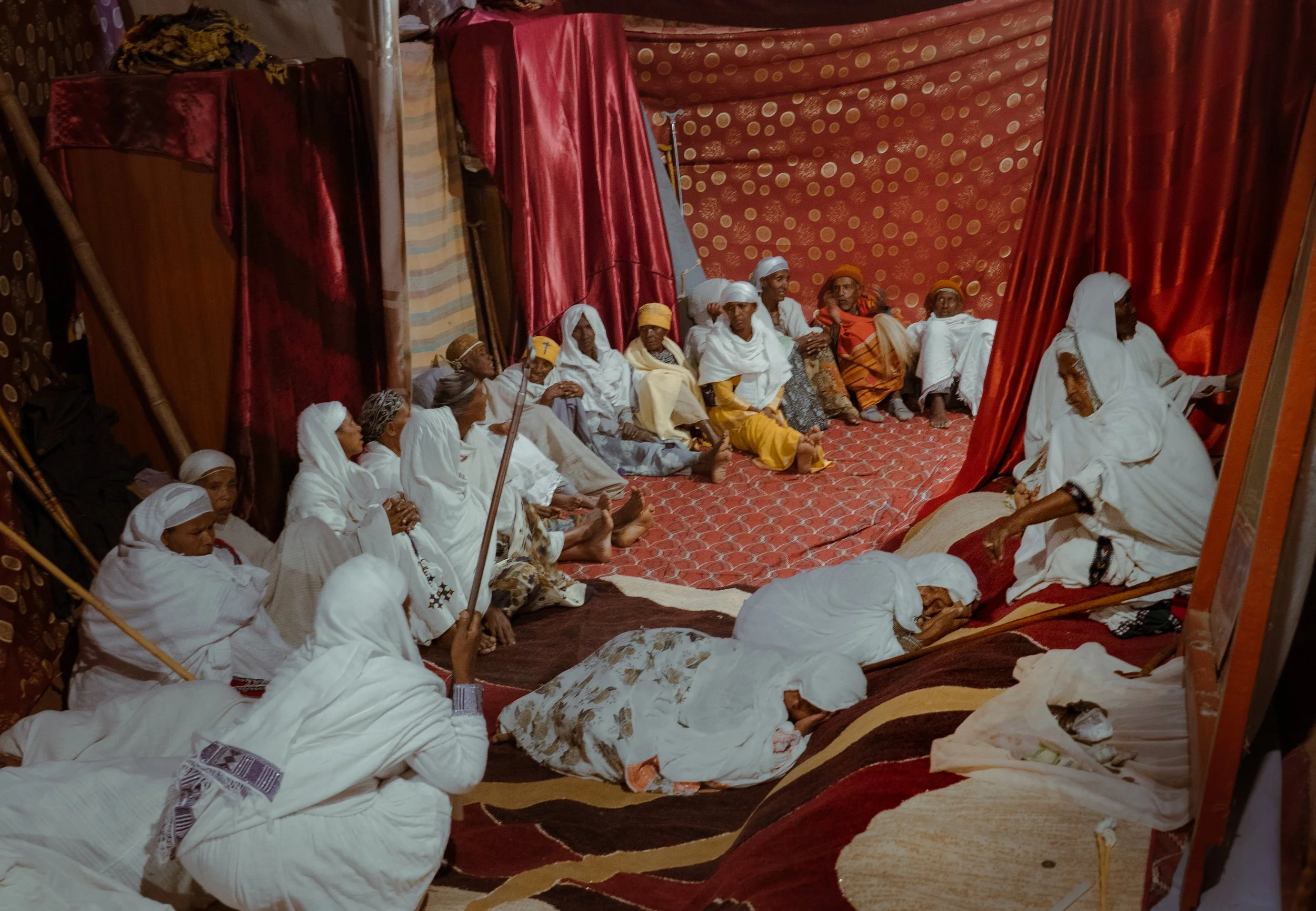
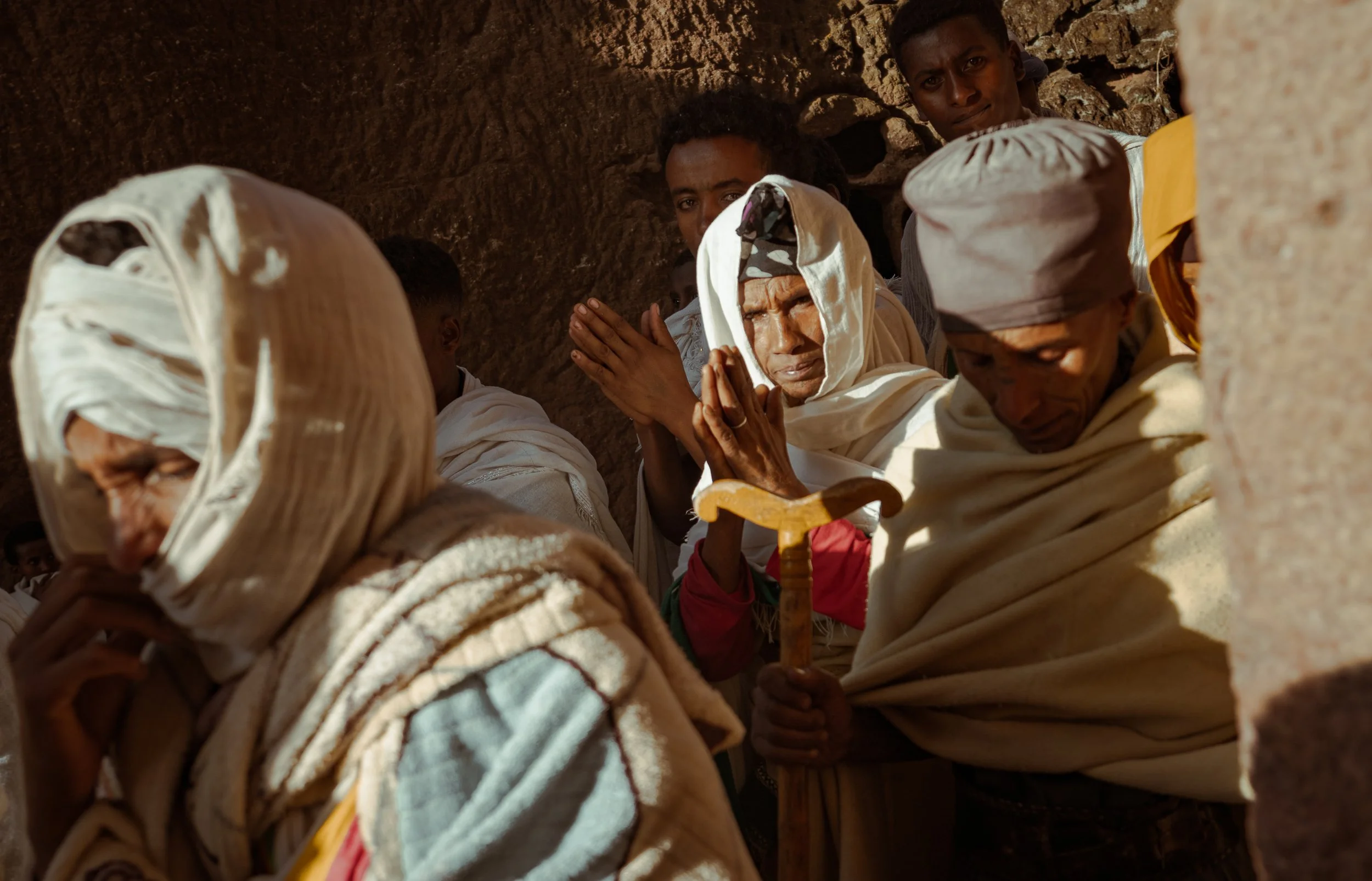
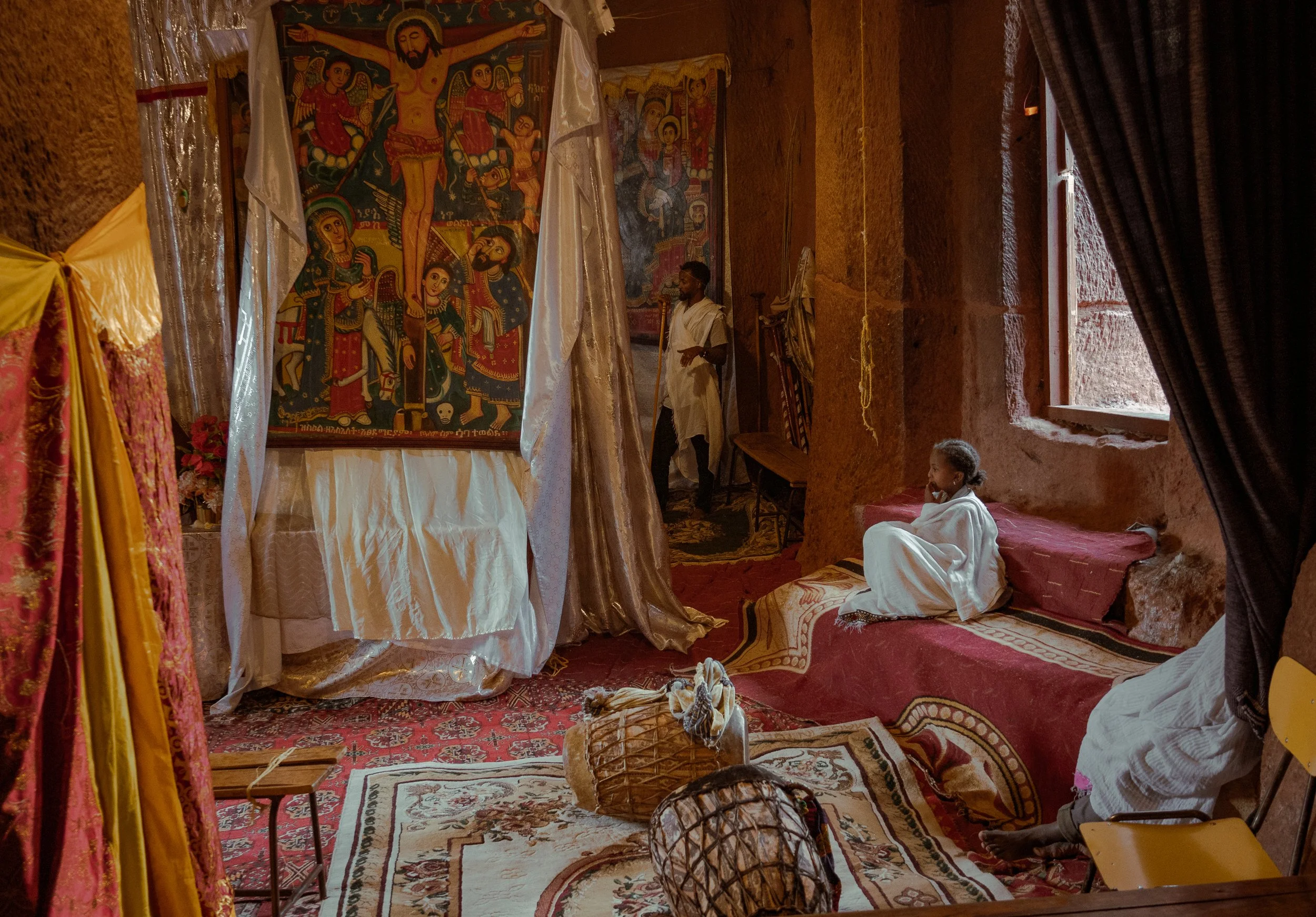
A hill rises above the church where I climbed to the top and watched as hundreds of pilgrims gathered around the outer rim, listening intently while the priest below recounted stories of the past. From that vantage point, it was impossible not to feel the weight of centuries of faith and the collective devotion of everyone present.
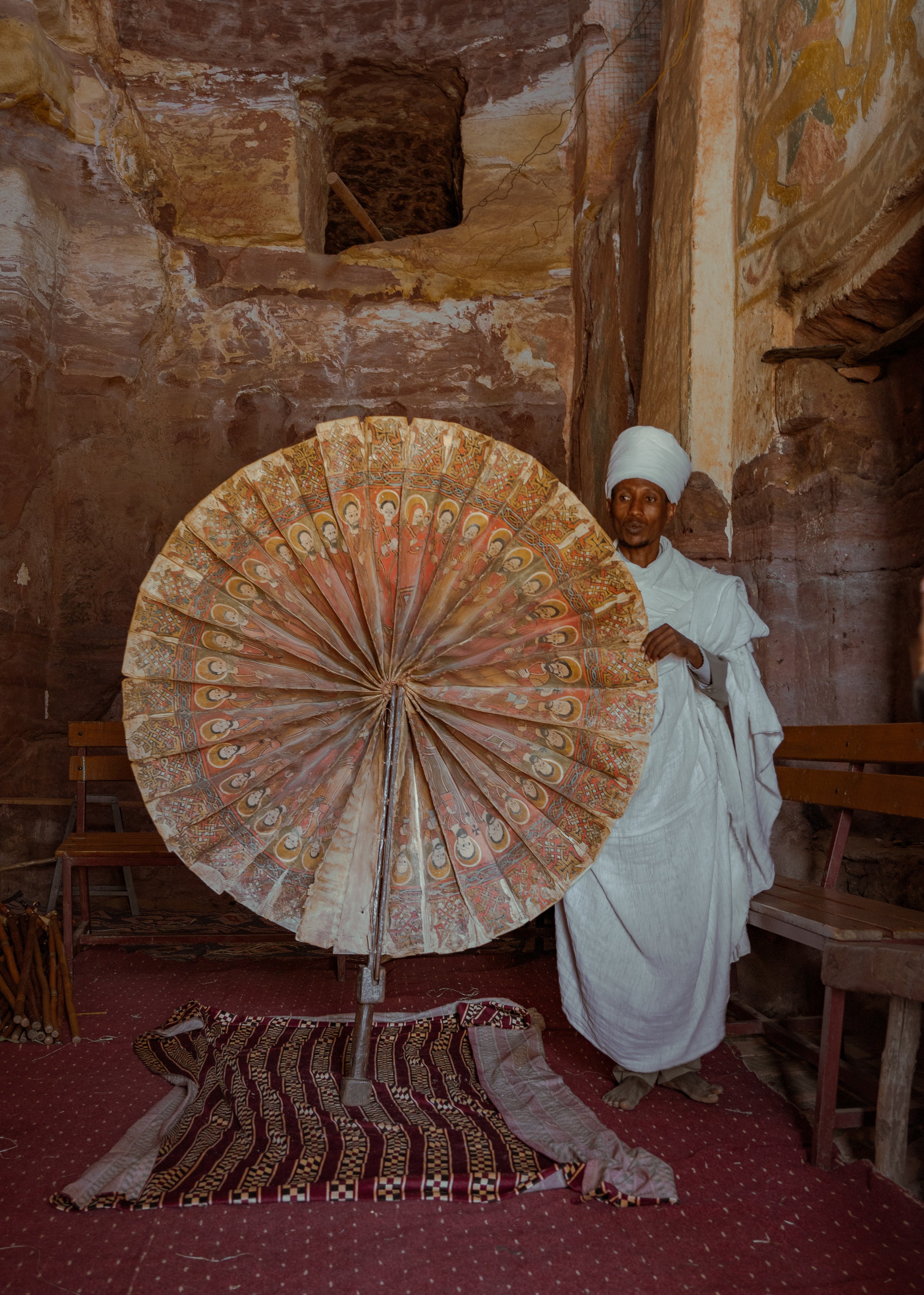
In the ceremonies, the air pulses with festive chanting and dancing, led by the resonant beat of the drums. Each drum is bound with crisscrossed leather, symbolizing the marks left on Christ’s body during his scourging before the crucifixion. A strip of cotton cloth draped over the drum recalls the shroud that wrapped him after his death. The drum itself carries symbolic weight: its larger side represents the Old Testament, the smaller, the New.
All the priests wear pristine white turbans, a sign of their purity, and carry wooden staffs that provide support when fatigue sets in during the long rituals. The handles of these staffs are shaped like the womb of Mary, a design passed down and carried in the same manner as their ancestors did centuries ago.
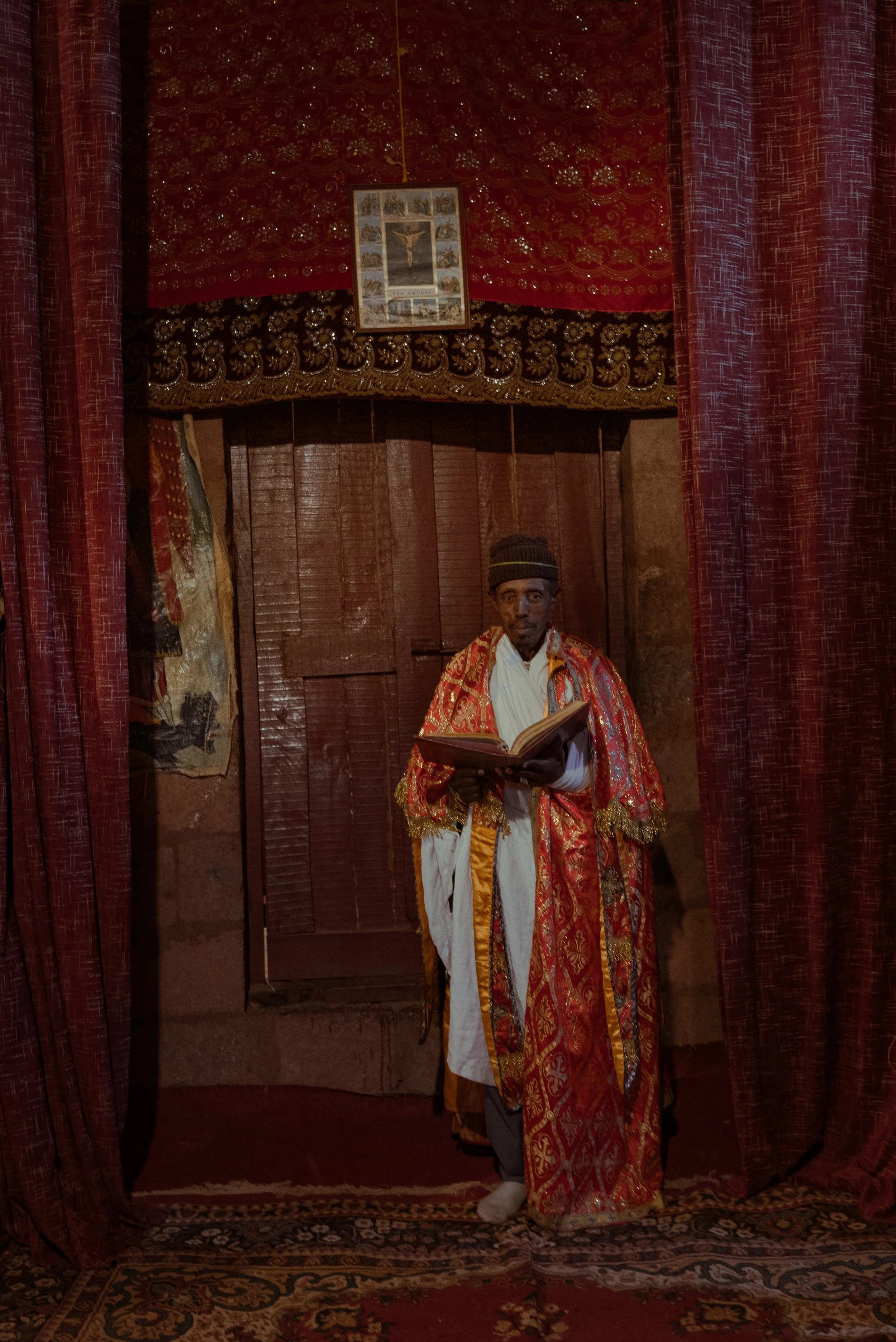
During the day, the church comes alive with the scent of incense and the glow of countless candles. The clergy wear their finest robes, and every worshipper holds a flickering candle. People greet one another warmly, and songs fill the air, wrapping everyone in a shared sense of devotion.
The ceremonies begin on Good Friday. Pilgrims fill the churches, moving quietly between prayer, rest, and attentive listening to the priests. Silence hangs in the air as priests and deacons chant for hours, accompanied by the steady beat of drums. Around you, some of the most devoted have observed their own ‘Last Supper’ the night before and will not eat or drink until Sunday morning. Fatigue shows on their faces, and many take brief rests or even sleep on the church floors between bouts of prayer.
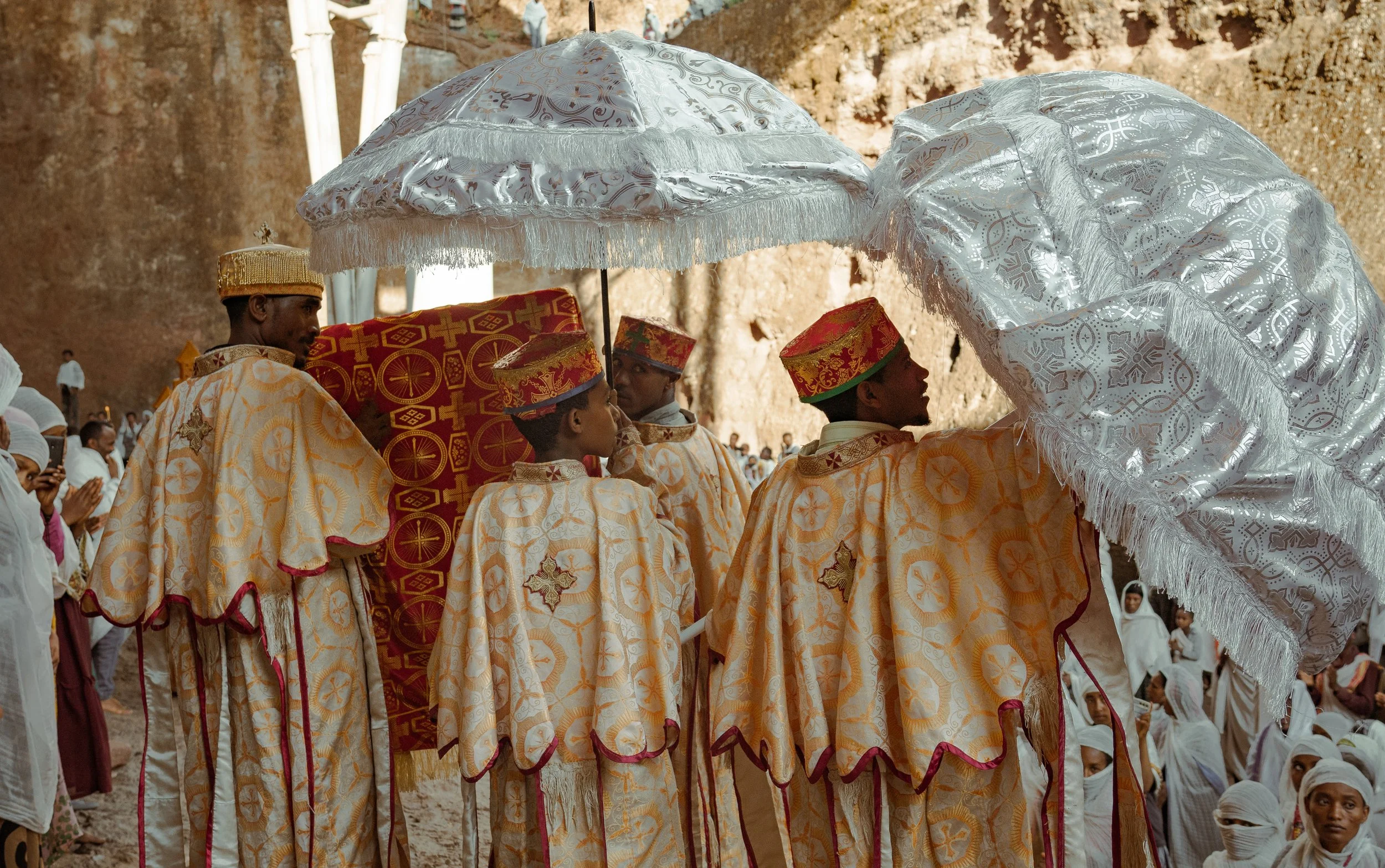
Pilgrims prostrate themselves repeatedly, bowing and rising again and again until exhaustion sets in. The main service is the Paschal Vigil on Saturday night—a sacred, intense gathering where music and dancing continue into the early hours. Prayers echo from the chambers below, filling the space with a sense of timeless devotion.
During the midnight of Easter Sunday, the air was thick with incense, and the soft flicker of candles illuminated faces worn from hours of devotion. Some worshippers had dozed off, exhausted by the vigil, while a deacon’s voice rose passionately over the speakers, carrying sermons meant to stir the faithful. Outside, the message spilled into the town through loudspeakers, reaching anyone who couldn’t make it inside.
By three in the morning, the sermon ended. The deacons moved slowly through the congregation, reading from the holy text and offering holy water. For many, this was the first drink they’d had in nearly 24 hours, following a strict fast that began on Good Friday. There was a quiet intensity in that moment—a mixture of relief, and shared reverence that made the hours of fasting and prayer feel profoundly meaningful.
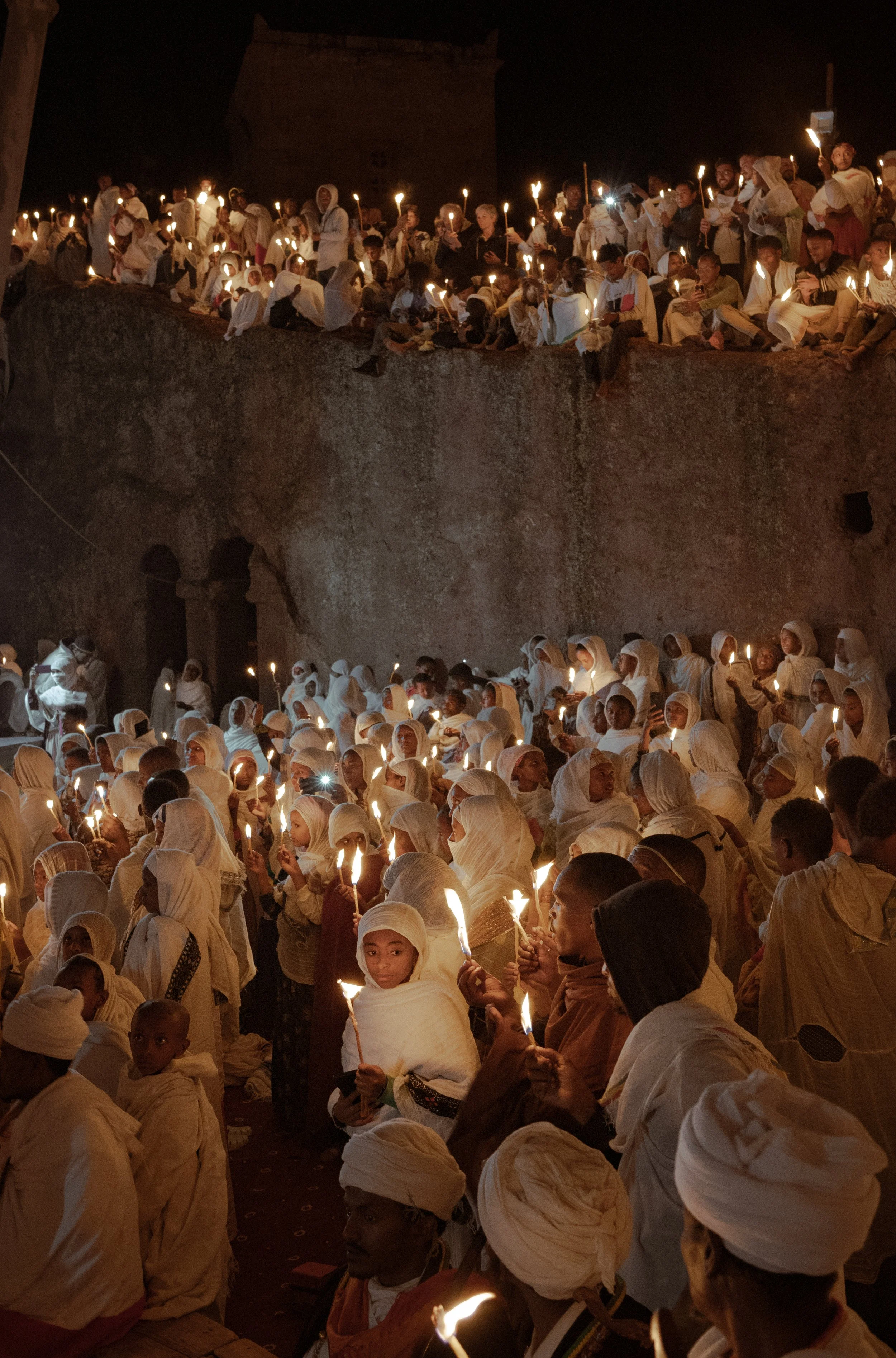
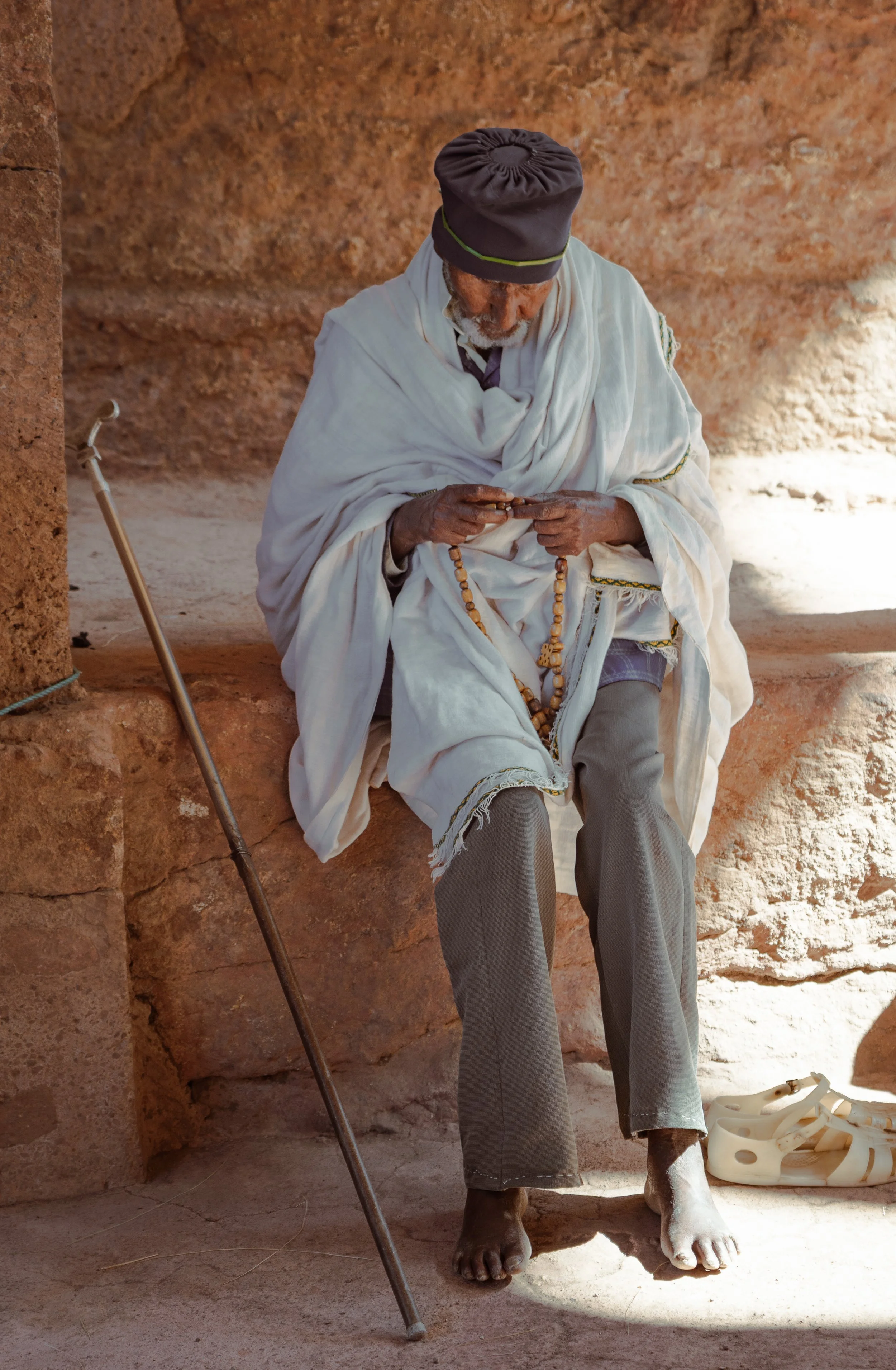
After drinking the holy water, worshippers light beeswax candles to guide their way home through the dark streets. Once home, the long fast comes to an end. Families break the 55-day fast by preparing and eating meat, often starting with the ritual slaughter of a sheep.
Easter Sunday brings communities together. Special church services and Masses are held across denominations, drawing families and neighbors to celebrate together. The sheep holds symbolic meaning, recalling the story of Abraham in the Old Testament. God asks Abraham to sacrifice his only son, but at the last moment provides a lamb in his place. In Christian tradition, this story is seen as a foreshadowing of Jesus, God’s own son, who was sacrificed for the salvation of the world.
The Ethiopian Orthodox Tewahedo Church places strong emphasis on the Old Testament, which is central to its identity. It is said that Christianity was introduced to the region through the biblical Queen of Sheba and her connection with King Solomon. This heritage underpins the church’s claim to possess the Ark of the Covenant, the legendary chest containing the Ten Commandments. The country’s imperial history is closely tied to King Solomon and King David through the Solomonic dynasty, which asserted an unbroken lineage from these biblical figures.
Another defining story in Ethiopian Christianity is the arrival of the Nine Saints, missionaries from different parts of the Byzantine Empire including Syria, Cilicia, Cappadocia, and Rome. They were experienced and devout Christians, committed to spreading the Gospel and establishing a strong church presence in Ethiopia. Upon arriving, they faced a country with deeply rooted traditions and beliefs, yet they persevered. The Nine Saints built churches and monasteries, translating the Bible into Ge’ez, which became the liturgical language of the Ethiopian Orthodox Church, allowing the faith to take root among the people. They still continue to use this Bible that includes up to 88 books, far more than the European canon